
Jungian Psychology of Archetype
The modern individual lives in a state of deep psychological division. We spend our lives building an idealized, polished version of ourselves to present to the world—a curated image designed to secure professional success, social acceptance, and emotional validation. We learn which parts of our personality are praised by our families, rewarded by our cultures, and accepted by our social circles, and we deliberately magnify those traits.
Yet this building of a public identity creates an inevitable, invisible cost. For every part of ourselves that we bring into the light of conscious approval, an equal and opposite psychological force is pushed down into the darkness of the unconscious mind. We treat our unwanted traits—our hidden envies, forbidden impulses, unsanctioned angers, and unfulfilled desires—as personal moral failures that must be completely buried.
However, this attempt at total burial ignores a fundamental law of psychological dynamics established by Swiss psychiatrist Carl Gustav Jung: what we repress does not disappear; instead, it gains hidden strength.
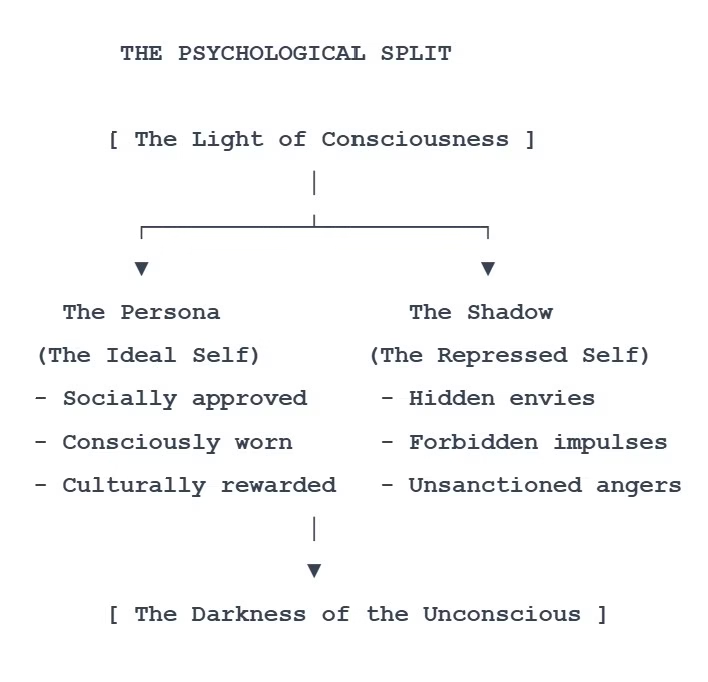
Our evolutionary and social development requires us to suppress certain raw instincts to live cooperatively in civilized society. Yet the modern psyche has taken this necessary suppression to an extreme level. By pretending that our darker, less rational impulses do not exist, we do not destroy them; we simply isolate them from the balancing control of our conscious mind.
Trying to live a life of perfect, unblemished goodness by relying on the total repression of our darker side is a dangerous psychological strategy. The solution is not to wage an endless moral war against your hidden traits; it is to engage in the disciplined, analytical process of bringing those hidden aspects into the light of conscious awareness.
To heal this deep psychological division, we must shift our perspective from moral judgment to analytical exploration. We need to look past shallow self-help trends and study the foundational architecture of Jungian analytical psychology.
By mapping the hidden geography of our unconscious—specifically the dark space Jung termed the Shadow—we can learn to recognize how our repressed traits covertly influence our daily behaviors. This structural integration allows us to break free from automated emotional reactions, reclaim our buried creative energy, and begin the journey toward true psychological wholeness.
The Geography of the Mind: Persona and Shadow
To understand the mechanics of the Shadow, one must first explore the broader spatial architecture of the human psyche as mapped out by Jungian psychology. The conscious mind is anchored by the Ego, the center of our immediate awareness and our daily sense of personal identity.
To navigate the complex social expectations of the outside world, the Ego constructs a specialized interface known as the Persona (derived from the ancient Greek word for a theatrical mask). The Persona is the functional compromise between the individual and society. It is the professional role we play, the polite manners we adopt, and the ethical mask we wear to ensure we belong within our community.
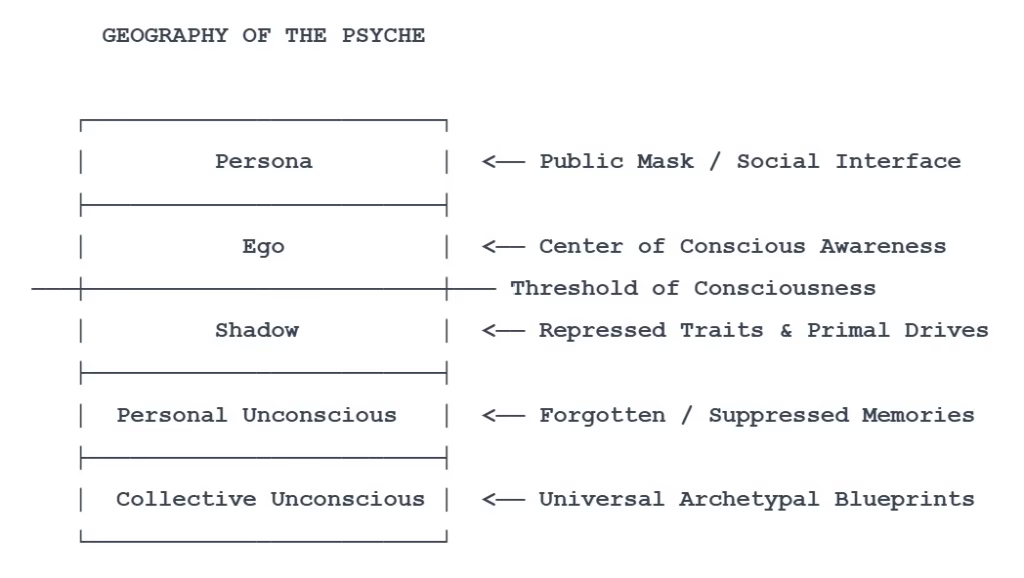
The Shadow is the structural counterweight to this public mask. It consists of every single psychic element that the Persona rejects. It is the reservoir of everything that feels incompatible with our conscious self-image.
If your Persona is strictly designed to be gentle, accommodating, and peaceful, your Shadow will inevitably accumulate raw assertiveness, aggressive drives, and sharp boundary-enforcing anger. If your Persona is structured to be hyper-rational, logical, and emotionally controlled, your Shadow will become a warehouse for intense, unpredictable emotional outbursts and chaotic intuitive drives.
The Shadow is not an external entity or a supernatural force; it is an entirely natural, necessary component of your personal unconscious. It contains all the discarded fragments of your potential identity.
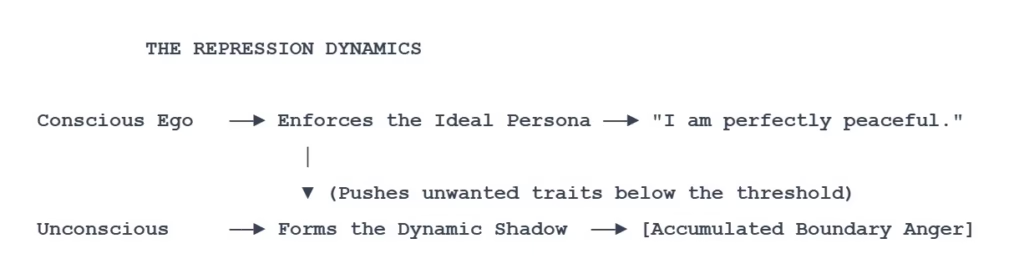
The danger arises because the boundary between the conscious Ego and the unconscious Shadow is not a solid wall; it is a porous, highly reactive filter. When we refuse to acknowledge the existence of our Shadow, it does not sit quietly in the depths of the mind. Because it is denied direct, conscious expression, it is forced to find indirect, automated pathways to the surface.
It subverts our conscious intentions, leaking out in the form of inexplicable moods, sudden addictions, irrational anxieties, and unexpected behavioral slips. To regain control over our lives, we must learn to recognize the primary mechanism the Shadow uses to interact with the outside world: the phenomenon of psychological projection.
The Mirror of Projection: Recognizing the Hidden Self
Because the conscious Ego cannot bear to see its own repressed, unappealing traits directly, the psyche utilizes a defensive survival mechanism known as psychological projection. Instead of recognizing a toxic or uncomfortable trait within ourselves, our unconscious mind projects that exact trait outward onto other people, objects, or social groups, treating it as an entirely external problem.
When you experience an intense, highly irrational wave of hatred, obsession, or irritation toward someone whose behavior does not personally harm you, you are almost always looking directly into the mirror of your own projected Shadow.
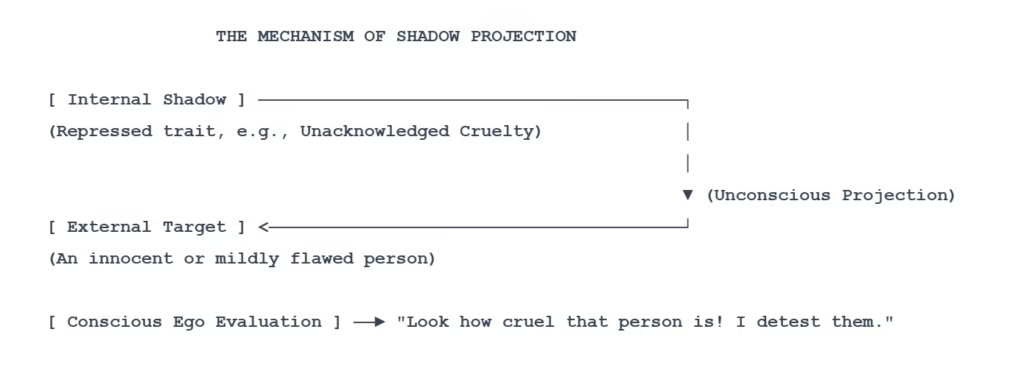
Consider a common interpersonal dynamic: an individual who prides themselves on being completely selfless, endlessly giving, and utterly devoid of personal ambition. Because their Persona is entirely dedicated to self-sacrifice, any natural desire for power, control, or personal recognition is aggressively pushed down into their Shadow.
When this individual encounters a colleague who is openly ambitious, self-interested, and highly focused on career advancement, they will not merely observe this behavior neutrally. Instead, they will feel a sharp spike of moral outrage, branding the colleague as deeply arrogant, selfish, and evil.
The intensity of this emotional reaction is the signature of the Shadow. The Ego is not reacting to the colleague’s actual behavior; it is reacting to the fact that the colleague is openly expressing a trait that the observer has spent a lifetime painfully repressing.
Foundational Jungian Literature
To trace these psychological mechanisms back to their historical roots, studying Jung’s original clinical observations provides the best conceptual foundation.
- The Archetypes and the Collective Unconscious by C.G. Jung (Amazon)The definitive, cornerstone text for understanding archetypal architecture. Jung maps out the structural layers of the human mind, detailing how the shadow operates both within the individual psyche and across the broader cultural collective.
- Modern Man in Search of a Soul by C.G. Jung (Amazon)An exceptionally accessible introduction to Jungian thought, written for the educated layperson. It provides brilliant breakdowns of spiritual alienation, the meaning of neurosis, and the vital necessity of psychological integration.
Recognizing your own projections requires a rare, uncomfortable level of radical honesty. It demands that whenever you feel a spike of intense resentment or judgement toward another person, you pause and ask yourself: “What is the hidden core of this reaction? Is this individual expressing a repressed capability that I secretly possess but refuse to acknowledge?”
By pulling these projections back into your own psyche, you disarm the Shadow’s power to distort your relationships, transforming external conflicts into profound opportunities for personal insight.
The Gold in the Dark: Reclaiming Buried Potential
A common misconception in popular psychology is that the Shadow is entirely composed of negative, destructive, or malevolent traits. While it certainly contains our primal aggressions and primitive drives, Jung emphasized that the Shadow is ultimately neutral. It simply holds whichever parts of the human experience your conscious ego has chosen to discard.
Consequently, for individuals raised in highly restrictive, hyper-rational, or emotionally cold environments, the Shadow often contains incredibly positive, vital traits: creative inspiration, artistic passion, spontaneous joy, raw intuition, and fierce boundary-protecting power. Jung famously referred to this hidden reservoir as the gold in the shadow.
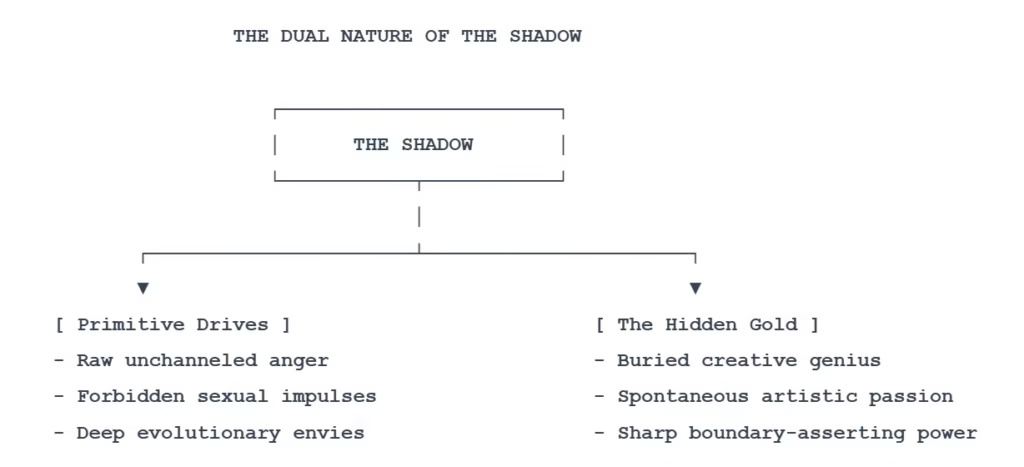
When we completely suppress our Shadow to maintain a polite, harmless Persona, we inadvertently drain ourselves of our vital life force (Libido). We become psychologically gray, predictable, and chronically uninspired. By locking away our capacity for aggression, we also lock away our capacity for resilience, decisive leadership, and creative risk-taking.
An artist who cannot access their internal darkness will struggle to produce profound, deeply resonant art; an entrepreneur who cannot access their primal competitive drive will struggle to navigate the harsh realities of a volatile market.
The integration of the Shadow is not about letting your primitive impulses run wild; it is about harvesting the raw emotional energy locked within those impulses and redirecting it toward high-level, conscious creation.
To systematically access this deep reservoir of mental energy, we must train ourselves to recognize the subtle entry points where the unconscious attempts to communicate with our waking life.
Deep Psychological Diagnostics
Transitioning from theoretical understanding to active psychological integration requires diagnostic tools that bridge the gap between consciousness and the deep unconscious.
- The Arch-Profile Jungian Shadow Assessment Journey (ClickBank)For individuals seeking a structured, analytical tool to map their specific repressed traits, this comprehensive digital assessment offers a deep-dive architecture to identify subconscious blind spots, projection patterns, and hidden creative blockages.
- The Deep-Mind Archetypal Sound Frequency Program (ClickBank)An advanced auditory tool utilizing precise acoustic patterns to help calm the active, analytical ego. By shifting brainwave states into deep relaxation, it lowers defensive cognitive barriers, making it significantly easier to engage in vivid dream journaling and active imagination work.
By learning to comfortably access these deeper layers of the psyche, you begin to recover the vital emotional energy that was previously spent on constant internal repression. The mind steps out of its exhausting state of self-warfare and unlocks a unified, highly resilient drive capable of sustaining profound personal transformation.
Deep Distinctions: The Dual Layers of the Unconscious
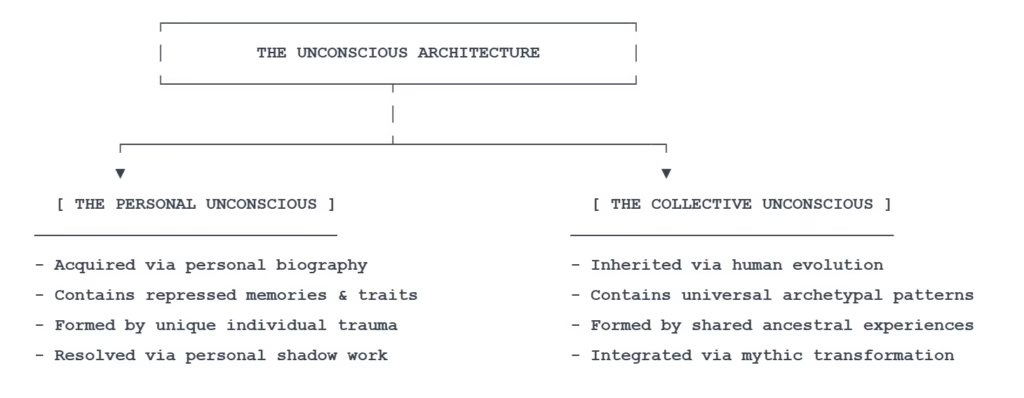
When embarking on the process of shadow integration, it is crucial to recognize that the unconscious mind is not a single, uniform landscape. Jungian psychology draws a sharp distinction between two entirely different layers of the unconscious psyche. Understanding this division is vital to identifying whether an emotional trigger belongs to your personal biography or to the deeper history of the human species.
The Personal Shadow vs. The Archetypal Shadow
The Personal Unconscious is an entirely individual ecosystem. It is developed over the course of your specific lifespan, acting as a repository for your unique forgotten experiences, suppressed childhood traumas, and traits that were explicitly rejected by your family or immediate culture. Your personal shadow is deeply intimate; its contents are filled with specific faces, personal memories, and distinct biographical events that shaped your ego boundaries.
The Collective Unconscious, by contrast, is an inherited, transpersonal layer of the human mind. It is completely independent of your personal life history, consisting of universal, evolutionary blueprints that are shared across all human beings, regardless of time, geography, or culture. This layer is populated by Archetypes—instinctive, ancient patterns of energy that express themselves through universal human myths, religious symbols, and deep cultural stories.
The shadow that resides at this deep level is not merely your personal flaws; it is the primordial, archetypal pattern of darkness itself—the universal human capacity for systemic cruelty, mass delusion, and destructive chaos.
Individual Traumas vs. Universal Mythic Themes
Because the personal unconscious is built on individual biography, working through it requires analyzing your personal relationship history, childhood conditioning, and unique emotional blind spots.
However, when you drop down into the collective unconscious, you encounter themes that feel massive, ancient, and deeply mythic. When an individual undergoes a profound psychological crisis or a major archetypal shadow breakthrough, they often experience dreams filled with universal symbols: labyrinths, dragons, ancient kings, floods, or sacred geometry.
Integrating these deep forces requires shifting away from basic personal counseling toward understanding universal mythology, religious symbolism, and the shared narrative journey of the human species.
The Great Convergence: Individuation and Wholeness
The supreme goal of Jungian psychology is a lifelong process of spiritual and psychological maturation known as Individuation. Individuation is the systematic journey of becoming an entirely unified, undivided human being—a state where the conscious Ego and the unconscious depths are brought into a harmonious, cooperative relationship.
Crucially, Jungian individuation completely rejects the common cultural ideal of psychological perfection. Jung famously stated: “I would rather be whole than good.”
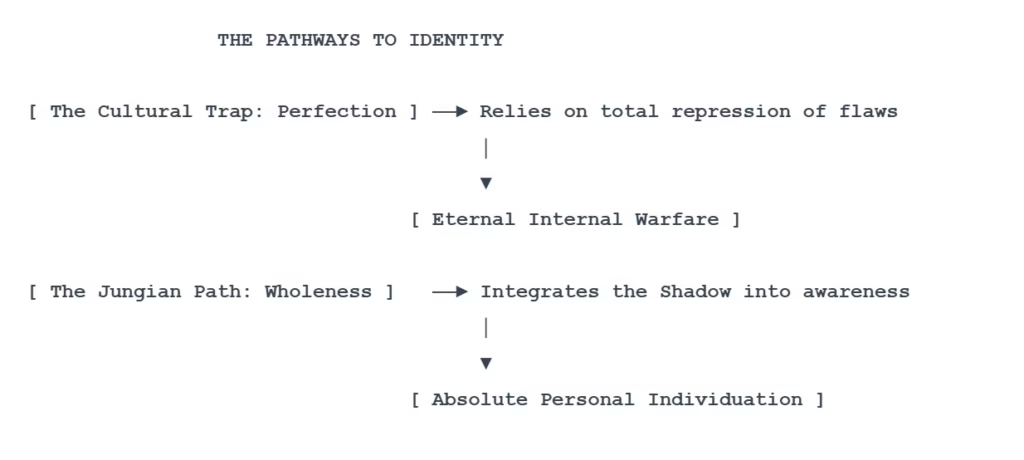
The pursuit of perfection is a psychological trap because it relies on the violent, systematic repression of any trait that does not fit an idealized moral standard. It creates a brittle, hyper-defensive personality that is constantly terrified of its own shadow.
The pursuit of wholeness, by contrast, is an act of profound self-compassion and radical reality acceptance. It recognizes that the human psyche naturally contains both light and dark, order and chaos, virtue and vice.
To become whole, you must drop the unrealistic demand for moral perfection and develop the courageous capacity to look directly at your flaws, your anger, and your hidden desires without judgment, choosing to understand them as natural components of the human experience.
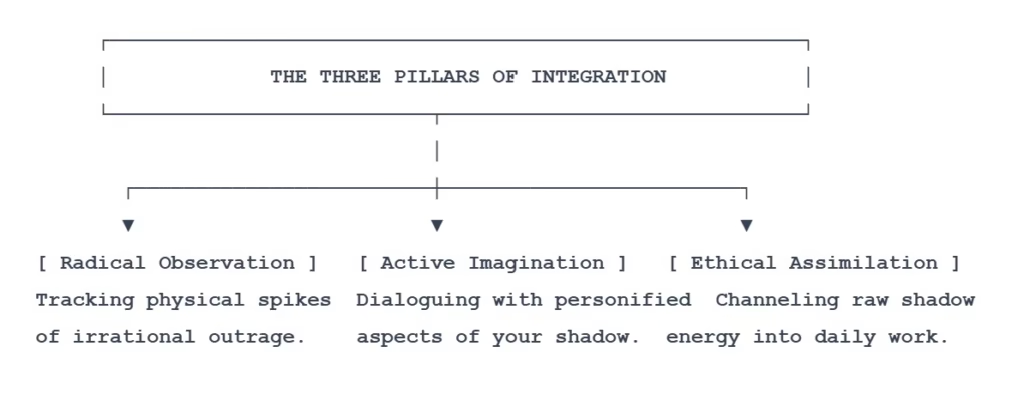
This journey of integration requires three distinct, progressive steps. First, you practice Radical Observation—meticulously tracking your daily interactions for any sudden spikes of irrational judgment or intense projection.
Second, you utilize Active Imagination—a highly specialized Jungian technique where you enter a light meditative state, visualize the personified aspect of your shadow, and engage in an active, conscious dialogue with it, allowing it to state its needs and hidden purposes.
Finally, you commit to Ethical Assimilation—finding structured, healthy, and conscious ways to channel your shadow’s raw energy into your daily life. Instead of allowing your repressed anger to explode into a toxic argument, you harvest that raw energy to confidently set a strict personal boundary, stand up for an ethical principle, or fuel an intense session of creative execution.
Practical Synthesis: The Daily Three-Step Integration Blueprint
To safely ground this deep psychological work into your everyday life, you can implement a structured, practical routine designed to catch shadow triggers and convert them into valuable opportunities for personal growth.
Step 1: The Outrage Audit (Catching the Projection)
The moment you experience an intense, highly irrational wave of irritation, disgust, or moral condemnation toward another person, immediately freeze. Before you speak, comment, or validate the anger, run the reaction through this strict analytical filter:
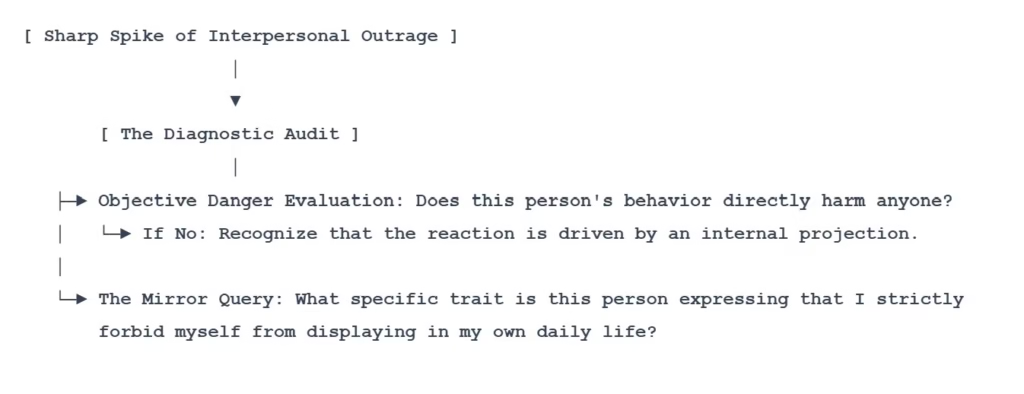
By identifying the underlying projection, you disarm the automated emotional charge, transforming a reactive interpersonal conflict into a clean piece of personal psychological data.
Interpersonal Archetypes: A Scannable Shadow Matrix
This scannable matrix maps out the most common shadow archetypes encountered in modern society, revealing how they project onto others and detailing the specific “hidden gold” that must be consciously reclaimed.
| Persona Pattern (The Mask) | The Shadow Manifestation (The Repression) | Typical Projection Target (The Trigger) | Reclaimable Gold (The Hidden Asset) |
| The Eternal Pleaser | Intense, unexpressed resentment; hidden desires for complete control. | Assertive, boundary-driven, or unapologetically selfish individuals. | Fierce self-sovereignty; the capacity to say “no” without guilt. |
| The Hyper-Rationalist | Unpredictable emotional outbursts; hidden superstitious fears. | Deeply intuitive, highly emotional, or artistic personalities. | Spontaneous creative inspiration; profound emotional depth. |
| The Harmless Ascetic | Hidden envies; unacknowledged cravings for wealth and luxury. | Highly ambitious, competitive, or visibly wealthy people. | Primal execution drive; the capacity to build material stability. |
| The Strict Moralist | Unconscious hypocrisies; deeply hidden chaotic impulses. | Free-spirited, non-conformist, or rebellious individuals. | Authentic moral freedom; the capacity to question outdated rules. |
Conclusion: Entering the Sanctuary of Wholeness
Ultimately, shadow work is not a dark, morbid exercise in self-punishment; it is the ultimate act of psychological liberation. It reminds us that our internal darkness is not a sign of brokenness, but a natural, unintegrated landscape filled with valuable life force.
You do not achieve true peace by trying to simulate an artificial state of moral perfection, nor do you achieve it by blinding yourself to your flaws. You find it by developing the rare courage to look completely into your own depths, welcoming back the parts of your identity that you previously chose to abandon.
The path of individuation demands a continuous, daily commitment to self-awareness. By bringing your shadow into the light of conscious integration, you stop living as a divided, reactive passenger in your own life. You claim a deep, unshakeable center that understands both its dark capacities and its high virtues.
In a world increasingly fractured by ideological conflict and automated outrage, the individual who has integrated their shadow becomes a vital point of clarity and balance—a person who has faced their internal civil war, dropped their defensive projections, and stepped into the radical sanctuary of psychological wholeness.
The Holispectrahub Knowledge Commons
If this deep exploration of the human unconscious brought clarity to your journey, consider expanding your practice with our companion structural essays.
- The Art of Non-Attachment: Comparing Stoic Apatheia with Buddhist Upekkha Explore how ancient Greek and Indian mental frameworks pair beautifully with modern Jungian concepts to build an unshakeable center.
- The Architecture of Focus: Designing a Distraction-Free Workspace Discover how to design a physical and digital workspace that minimizes sensory friction, protecting your conscious energy for deep creative work.
Disclaimer: Holispectrahub is dedicated to publishing highly researched, value-first content. This essay features hand-selected resource links aimed at supporting your practice; we may earn a small affiliate commission at absolutely no additional cost to you if you choose to purchase through them.