Table of Contents
Pragjyotishpur to Assam: Tracing the History
Nestled in the verdant landscapes of present-day Assam, the ancient city of Pragjyotishpur stands as a testament to the rich history and vibrant culture of the region. In ancient times, Assam was known as Pragjyotishpur, a name that carries deep historical and cultural significance. The origins of Pragjyotishpur can be traced back to antiquity, when it served as the capital of the legendary kingdom of Kamarupa, which encompassed present-day Assam and parts of neighboring regions.
Pragjyotishpur: The Ancient History of Assam
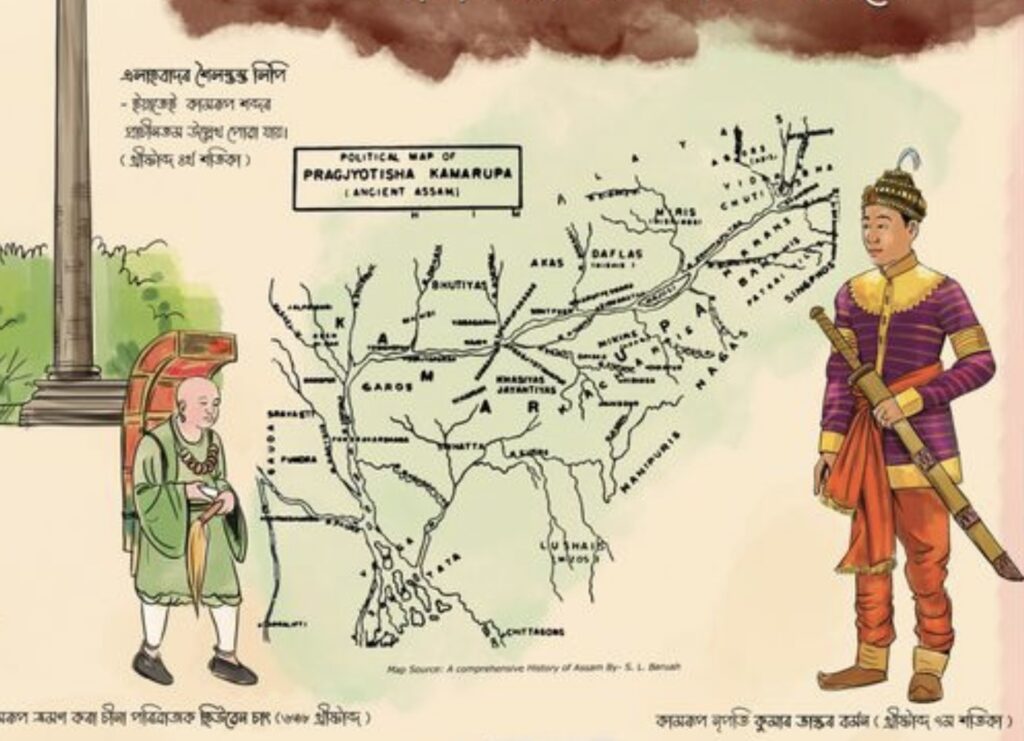
Assam, known as Pragjyotishpur in ancient times, holds a storied past rooted in mythology and history. Referred to in texts like the Kalikapurana, it’s believed to be the place where Lord Brahma created the stars. Pragjyotishpur finds mentions in epics like the Ramayana and Mahabharata, with the latter describing Bhagadutta, also known as Sailyalaya, as its king. The kingdom extended from the Bay of Bengal to the river Kausika (Kosi) in Bihar. Over centuries, it evolved into Kamrupa, extending far beyond present-day Assam, as described by scholars like Porjitor.
The Medieval History of Assam
Pragjyotishpur thrived along the banks of the mighty Brahmaputra River. As early as the 4th century BCE, Pragjyotishpur was ruled by dynasties such as the Varmanas and the Pala kings. Pragjyotishpur, meaning “the city of eastern light,” was more than just a geographical location; it was a beacon of enlightenment, knowledge, and cultural richness in the eastern region of India. As the capital of Kamarupa, Pragjyotishpur flourished as a center of trade, learning, and spirituality, attracting scholars, traders, and artisans from far and wide.
During the reign of King Bhaskarvarman in the 7th century, Kamrupa stretched till the greater part of Bengal. Records suggest its boundaries reached the Bhutan hills and parts of Nepal. The Ahoms, who entered the Brahmaputra valley around 1226 A.D., expanded their empire significantly. Pragjyotishpur, with its capital renowned as the city of eastern astrology, remained the nucleus of the Kamrupa kingdom, encompassing vast tracts of the Brahmaputra valley, Eastern Bengal, and present-day Bhutan.
The Modern History of Assam

The formation of present-day Assam took shape during the British colonial period, notably marked by the Treaty of Yandabo in 1826 A.D. The British reorganized the Brahmaputra valley into districts like Goalpara, Kamrup, Darrang, and Nagaon. Later, districts like Sibsagar and Lakhimpur were constituted, with Guwahati as the headquarters. At the time of India’s independence, Assam comprised 13 districts, which has now expanded to 35 administrative districts. Geographically, present-day Assam spans from 89° 42′ E to 96° E longitude and 24° 8′ N to 28° 2′ N latitude, sharing borders with two foreign countries and seven Indian states. Its rich history and diverse cultural heritage continue to shape its identity and trajectory in the modern era.
Pragjyotishpur and Assam’s Vibrant Craft Culture
In addition to its intellectual and spiritual significance, in ancient times Pragjyotishpur was renowned for its vibrant craft culture, which flourished from ancient times. Artisans in the region honed their skills in a variety of crafts, including weaving, pottery, metalwork, and wood carving, creating exquisite works of art that showcased the rich cultural tapestry of Assam. From intricately woven textiles to intricately carved sculptures, the craftsmanship of Pragjyotishpur reflected the ingenuity, creativity, and cultural diversity of the region.
The craft culture of Pragjyotishpura reached its zenith during the reign of the Ahom kings, who ruled Assam for nearly 600 years from the 13th to the 19th centuries. Under the patronage of the Ahom rulers, traditional crafts flourished, with artisans producing masterpieces that adorned palaces, temples, and royal courts. The Ahom kings were avid patrons of the arts, commissioning elaborate silk textiles, ornate jewelry, and intricate architectural marvels that showcased the unparalleled craftsmanship of Pragjyotishpura.
Even today, the legacy of Pragjyotishpura lives on in the vibrant craft culture of Assam. Artisans continue to practice traditional crafts passed down through generations, preserving ancient techniques and designs while adapting to modern tastes and trends. From the colorful handwoven textiles of the Mishing tribe to the intricate bamboo and cane work of the Karbis, the craftsmanship of Pragjyotishpura continues to inspire awe and admiration, serving as a testament to the enduring spirit of creativity and innovation that defines Assam’s cultural heritage.
5 Renowned Crafts of Assam from Ancient History

Assam is vibrant with crafts and culture throughout its length and breadth since ancient times. However, some of the crafts are well-known across the India and the world. Here is the information on the five renowned crafts of Assam with roots in the antiquity.
1. The Assam Silk
Kautilya’s Arthashastra, dating back to the 4th century B.C., lauds ancient Kamrupa for its mastery in silk production, showcasing three exquisite varieties: dukula, patrorna, and khaumak. Historians, including K. L. Barua, suggest these silks as muga, pat, and eri silk, reflecting the region’s rich heritage in sericulture.
Sualkuchi is a famous village in Assam that produces silk crafts well known over the country. The silk weaving tradition in Sualkuchi is kept alive by skilled artisans who have inherited the craft from their ancestors. These artisans use traditional handlooms to weave intricate designs and motifs inspired by nature, mythology, and Assamese culture. The intricate patterns and vibrant colors of Sualkuchi silk reflect the artistic sensibilities and cultural richness of Assam, making it a prized possession for connoisseurs of fine textiles around the world.
2. Bamboo Crafts
The tradition of bamboo crafts in Assam dates back to ancient times, with references found in historical texts and archaeological findings. In the 6th century B.C., during the reign of the Kamrupa kings, bamboo crafts gained recognition when Bhaskarvarman presented exquisite bamboo items to the King of Kannauj as a token of friendship and diplomacy.
Today, Assam’s bamboo crafts continue to flourish throughout the length and breadth of Assam, blending traditional techniques with contemporary designs to create a wide array of products such as furniture, baskets of various shapes and sizes, musical instruments, and japi, a kind of traditional headgear that since the reign of the Ahoms.
3. Masks of Majuli
The history of mask craft in Majuli traces back centuries, rooted in the island’s rich tradition of performing arts and religious rituals. Masks have been an integral part of Assamese cultural practices, often used in traditional dance dramas like Bhaona, Sattriya Nritya, and Ankia Nat. These performances, which narrate stories from Hindu mythology and the lives of saints, feature colorful masks representing various characters such as gods, goddesses, demons, and animals.
The origins of mask-making in Majuli can be attributed to the Vaishnavite saint and social reformer, Srimanta Sankardeva, who laid the foundation for the cultural renaissance in Assam during the 15th and 16th centuries. Sankardeva, along with his disciple Madhavdeva, introduced Sattriya culture to Majuli, including the art of mask-making, as a means of imparting spiritual teachings and moral values to the masses.
Over the centuries, mask-making in Majuli evolved into a refined art form. These skilled craftsmen employ traditional techniques and locally available materials such as bamboo, clay, cloth, and natural dyes to create intricately designed masks that capture the essence of Assamese mythology and folklore. The masks crafted in Majuli are not merely decorative objects but powerful symbols imbued with spiritual significance and cultural meaning. Each mask reflects the aesthetic sensibilities and religious beliefs of the Assamese people, serving as a medium for storytelling, spiritual expression, and artistic exploration.
4. Brass and Bell Metal Crafts of Assam
The documented history of Assam’s bell metal industry traces its origins to the Mauryan period, from approximately 321 B.C to 185 B.C. Emperor Ashoka’s era saw the passage of Buddhist missionaries, potentially accompanied by skilled metal crafters known as kanhar, who journeyed through Assam enroute to Southeast Asian countries. It’s speculated that some of these artisans settled in various regions of Assam during this period.
Legends recount that Kumar Bhaskar Varman, reigning from 594 to 650 A.D, presented King Harshavardhana of Kannauj with cymbals and an assortment of drinking vessels, illustrating the longstanding tradition and craftsmanship of Assam’s metal industry. Hajo and Sarthebari are the famous brass and bell metal crafting areas in Assam since those times.
It is believed that the Moria people, who were Muslims migrated to Assam alongside Muslim invaders during the Ahom regime since 1662 A.D. Over time, they settled in Assam, with Hajo emerging as a prominent center for this settlement. These settlers were highly skilled craftsmen who eventually began producing brass items.
5. Pottery and Terracotta Crafts of Asharikandi in Assam
Pottery and terracotta crafts have been integral to the cultural heritage of Assam, with a rich history dating back centuries. The Goalpara kingdoms played a significant role in the development and promotion of these crafts, fostering a thriving artistic tradition that continues to endure to this day.
Asharikandi village, located in Dhubri district, is renowned for its pottery and terracotta craftsmanship. Artisans in this village skilfully mold clay into various forms, ranging from utilitarian vessels to decorative figurines, showcasing their mastery of traditional techniques passed down through generations.
One of the most iconic terracotta crafts of Assam is the “hatima putola”, a kind of doll similar to the Mother Goddess figurine found in the days of the Harappan Civilization. These clay dolls crafted with intricate details and exquisite craftsmanship represent the tangible cultural richness of Pragjyotishpur, or the modern-day Assam. They are often used as decorative items in homes and temples, as well as during religious ceremonies and festivals.
In addition to these figurines, artisans create a wide range of pottery and terracotta items, including cooking pots, water containers, lamps, and decorative sculptures. Each piece reflects the unique artistic sensibilities and cultural heritage of the region, with motifs inspired by nature, mythology, and everyday life in Assam.
Conclusion
Pragjyotishpur stands as a symbol of Assam’s rich history and vibrant craft culture, weaving together centuries of tradition, innovation, and creativity. From its ancient origins as a center of trade and learning to its modern-day status as a bastion of craftsmanship and artistry, Pragjyotishpura continues to captivate the imagination and inspire admiration, showcasing the timeless beauty and cultural richness of Assam.