“Millet”, The Sacred Grain: Tribal Wisdom & Spiritual Philosophy
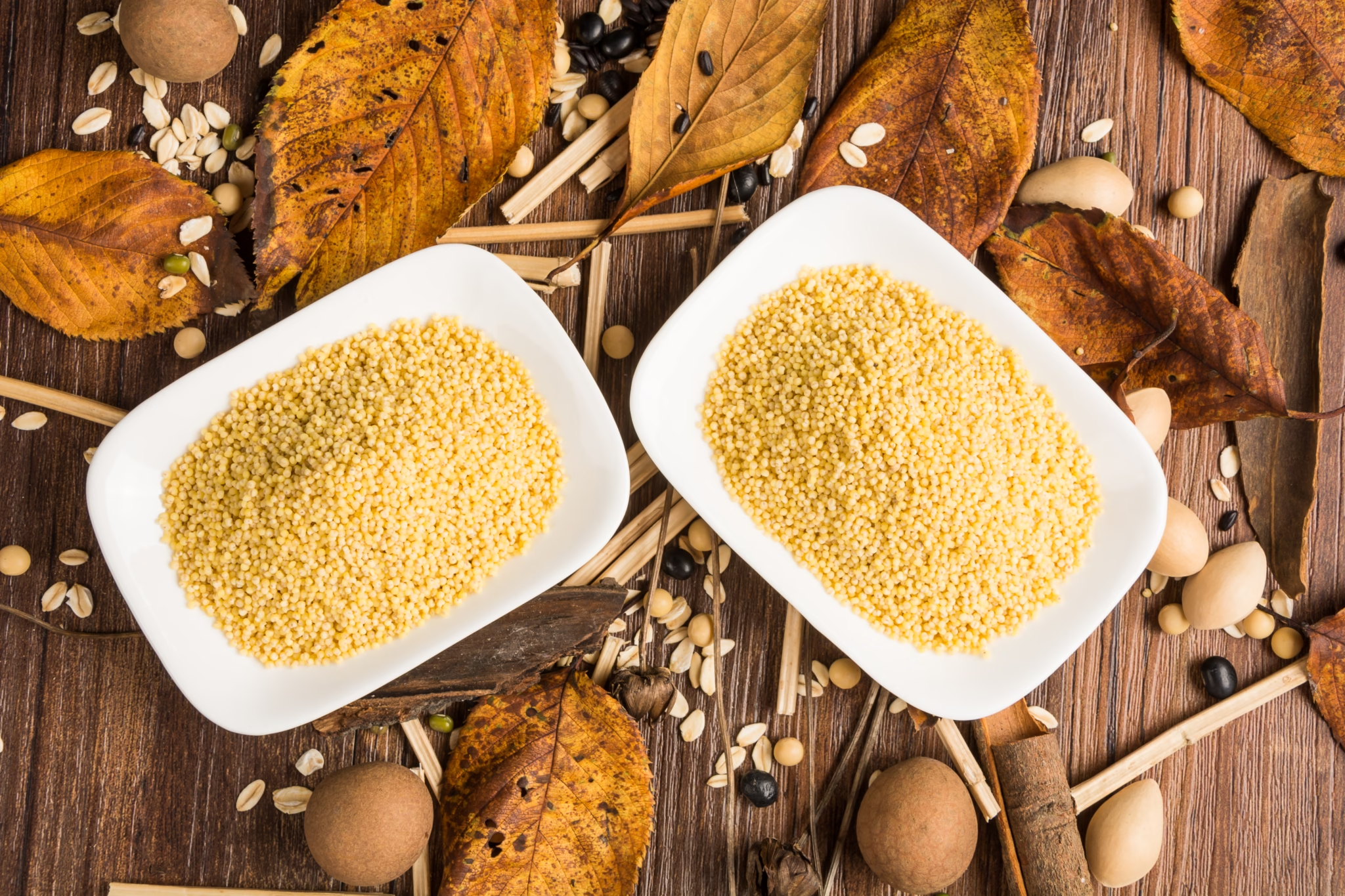
Millet as Sacred Companion In the semi-arid hills and plateaus of India, for countless generations, millet was not merely a cereal—it was sacred companion, anchor, offering, identity. For tribes like the Kutia Kondh (Odisha), Nyishi (Arunachal), Baiga, Gond, and many others, millets such as pearl millet, finger millet, foxtail millet, kodo millet, barnyard millet form an ancestral, spiritual ecology. A 2025 review in Journal of Ethnic Foods affirms that millets have been embedded in religious ceremonies, folktales, ethnic cuisines, and rituals from the Vedic era through medieval India. In tribal festivals, millets carry memory—not just nutrients—connecting body, soil, lineage, and cosmos. This post will explore each millet variety through philosophical, tribal, meditative and ecological lenses – drawing on Upanishadic wisdom, tribal oral traditions, modern sustainability, and mindful eating practices. Pearl Millet (Bajra) – Resilience in Ritual and Rootedness Tribal Significance Pearl millet (bajra) is a hardy rain-fed crop often grown by the Baiga and Gond tribes in central India. The Baiga, who reject ploughing to honor “Mother Earth,” cultivate kodo millet and bajra through shifting agriculture, eating it as their staple and offering it in rituals. In Odisha’s Kutia Kondh tribe, for example, the festival Burlang Yatra is built around seed exchange, temple dances, and millet offerings—a collective effort that revived twelve millet varieties from memory and preserved them for future generations. Similarly, the Nyishi of Arunachal offer a fermented millet drink (Madua Apong) to their deity—a sacred gesture linking crop and cosmos. Storytelling Through Seed and Song In many tribal oral traditions, women as seed-keepers play poetic roles. They share millets in songs, weave stories, crown brides with millet paste (e.g., Korwa in Chhattisgarh), and preserve biodiversity through intercropping . These practices weren’t agricultural—they were spiritual. Each grain carried memory, identity, and ethics. Take the Taittiriya Upanishad, which teaches: “Never scorn food… share food with everyone… food is founded on food.” Food becomes not just nourishment—but a relation to Earth, Self, and community. Likewise, mitāhāra (moderate, pure eating) emerges in texts like the Hatha Yoga Pradipika and Śāṇḍilya Upaniṣad, emphasizing that diet is both physical and subtle: too much or impure food clouds the mind and spirit. Vedantic Reflection The Taittiriya Upanishad teaches: “Never scorn food… share food with everyone… food is founded on food.” Here, bajra porridge becomes more than sustenance—it is prasad, mutual becoming, shared divinity. In Śāṇḍilya Upanishad, mitāhāra (moderate, pure eating) is lauded—bajra, simple and pure, fits the sattvic ideal. Modern Relevance Pearl millet’s drought resistance makes it vital in India’s climate crisis adaptation. It uses far less water than paddy or wheat. Sustainably cultivating bajra revives tribal food security, counters malnutrition, and nurtures ecological balance. Finger Millet (Ragi/ Mandua) – Nourishment and Ritual Tribal Stories In Arunachal Pradesh, tribes like the Adi, Nyishi, Monpa and Idu Mishmi prepare finger millet (ragi) in multiple ways—from pancakes to porridges, and fermented brews like Apong during festivals. A 2024 ethnobotanical study of Nepalese and Indian traditions describes how finger millet is offered at ancestral shrines, used in wedding ceremonies, and as sacred food in life-cycle events. Spiritual Philosophy In the Chandogya Upanishad (6.5), food is explained as transforming into body, mind, prāṇa (vital life). This is not metaphor—it’s ontological. The food we choose is what we become, from tissue to tone. This aligns with tribal millet practices. When millet is offered as prasad, eaten during birth ceremonies, weddings, or death rites, it’s more than nutrition—it is ancestral communion. Moreover, millets embody the sattvic ideal in Yogic diet: natural, pure, life-affirming, nonviolent Mindful Eating Practice Prepare ragi kheer: slow cook finger millet with water/milk, add jaggery and cardamom. Sit alone. Before eating, close eyes and breathe. As you sip each spoonful, feel warmth and sweetness merging with awareness. Eat silently—taste lineage. Nutritional & Ecological Value Finger millet is rich in calcium, iron, fiber, and essential amino acids. Unlike wheat and rice, it helps regulate blood sugar and supports bone strength. Its cultivation supports biodiversity and low-input rain-fed farming. Foxtail Millet (Kangni) – Cultural Celebrations & Communal Living Tribal Use & Ritual Foxtail millet is common in central and southern tribal regions. In Odisha’s Burlang Yatra, kangni is one of several millets exchanged and prayed over. Among the Mizo and Naga tribes, millet dishes mark pre-harvest festivals (Thalfavang Kut, Te-l Khukhu) as offerings of gratitude. The Naga festival Te–l Khukhu (Nagaland) is based on a legend where a toad brings millet to a girl—and millet is offered annually in celebration—a living myth linking nature, gratitude, and millet. Vedantic Lens Vedanta emphasizes krishna → kṛṣṇa (plough) and anusandhana (attention) in every act. Growing kangni, harvesting it in community, and cooking it gratefully becomes yoga—unified labor, devotion, celebration. Ecological & Health Insights Foxtail millet is resilient, nutritious, and adaptogenic to poor soils and low rainfall—making it ideal for tribal ecological zones. Kodo Millet – Endurance & Earth-Respecting Cultivation Tribal Wisdom Kodo millet thrives on poor, rocky soils in central India. The Baiga and Gond cultivate it through shifting agriculture without ploughing—honoring the Earth as Mother. In Chhattisgarh, the Korwa women mix kodomillet paste into brides’ crowns & blessings. Spiritual Depth This tribe’s worldview is deeply animistic—the seed is life, the soil is mother, the act of cropping is sacred covenant. Eating kodomillet is embodying a pact of reciprocity with Earth—not extraction, but humble partnership. Modern Relevance Kodo millet’s resilience is crucial for climate-smart agriculture. It helps degraded lands recover, prevents soil erosion, and preserves food sovereignty for tribal farmers. Barnyard Millet – Festivals & Ecology Tribal & Regional Use Barnyard millet (sawan/jhangora) is grown in eastern India and the Himalayas. Among tribal communities like the Baiga and Hill Miri, it’s used in porridges, breaths, and local brews (opo). In Odisha, barnyard millet sweets and offerings are essential in Nuakhai—a festival of the first grain—creating communal unity. Philosophical Perspective Barnyard millet reminds us of alamkara (ornament) in spiritual texts—food becomes ritual beauty. In Upanishads, first fruits and grains are presented to gods, ancestors, then consumed—a procession of respect. Barnyard millet is … Continue reading “Millet”, The Sacred Grain: Tribal Wisdom & Spiritual Philosophy