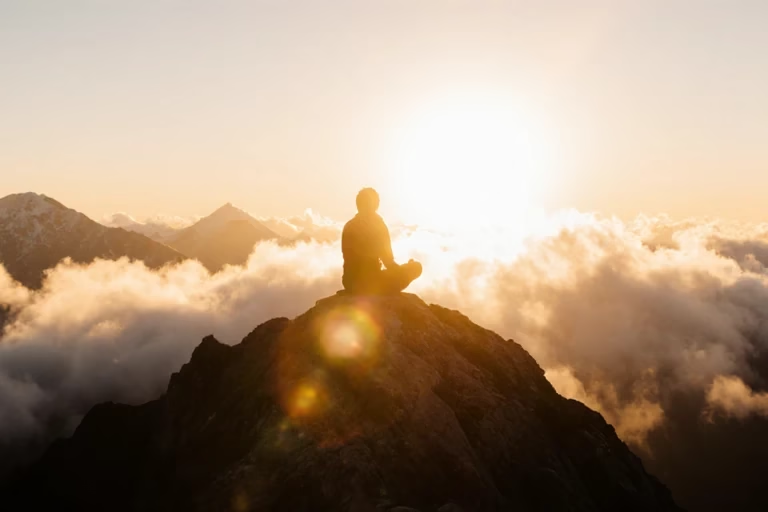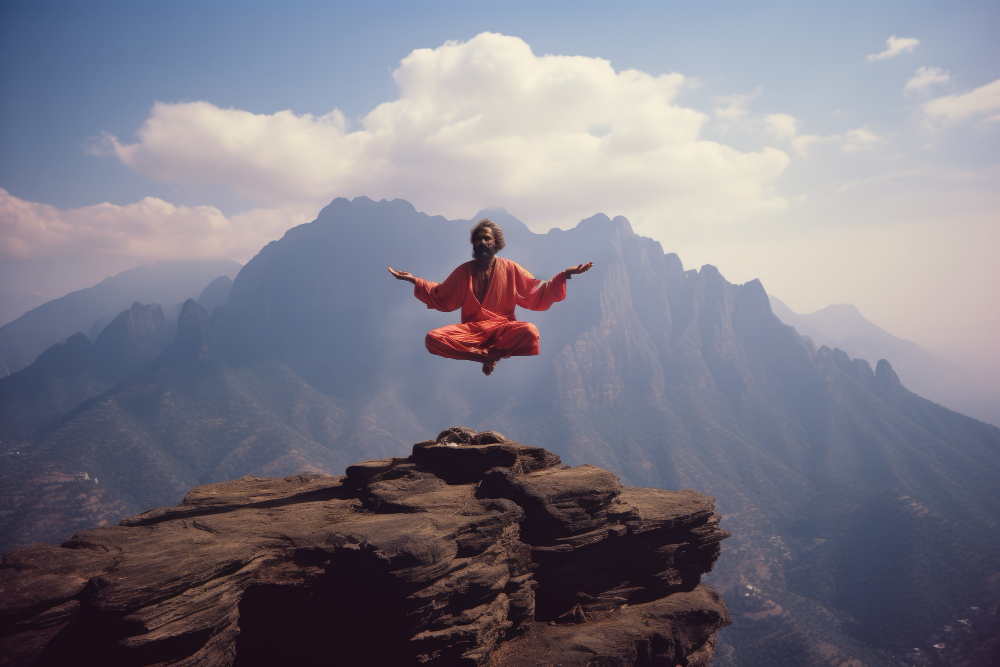

Why Did the Ancient Yogis Go to the Himalayas to Meditate? Can Meditating There Bring Inner Peace and Wisdom?
The Timeless Call of the Himalayas Why did the ancient yogis go to the Himalayas to meditate? It is a question that transcends time, culture, and geography. The Himalayas have been a magnet for spiritual seekers for thousands of years, drawing yogis who sought solitude, silence, and the profound awakening that comes from meditative practice. These mountains are more than mere elevations of earth—they are sacred temples, resonating with vibrations that nurture the soul. Meditating in the Himalayas offers not only a retreat from worldly distractions but also a unique opportunity to engage with the eternal. But can this meditative practice truly change the way we perceive life? And how does the Himalayas’ serene environment cultivate wisdom and inner peace? This blog seeks to answer these questions through the lens of ancient yogic wisdom, Vedantic philosophy, and modern spiritual understanding. 1. The Himalayas: Nature’s Spiritual Laboratory The Himalayas were seen by ancient yogis as a natural spiritual laboratory. These mountains provided the perfect setting for meditation due to several key factors: Swami Vivekananda famously described the Himalayas as “a living library of eternal wisdom,” where seekers could learn from the environment itself without any formal teaching. The mountains’ harsh climates and demanding terrains also trained the mind in resilience, discipline, and endurance, which are critical qualities for spiritual practice. Yogis often spent years in caves or remote valleys, observing the cycles of nature, seasons, and their own minds in profound detail. This immersive environment allowed for deep reflection and heightened sensitivity to both external and internal realities. 2. Insights from the Upanishads The Upanishads, the spiritual texts of ancient India, repeatedly emphasize meditation, silence, and renunciation. For ancient yogis, the Himalayas provided the perfect environment to embody these teachings. The mountains became a sacred classroom for cultivating awareness, insight, and direct experience of the ultimate reality. The natural silence reinforced the practice of listening—not just outwardly, but inwardly, to the subtle voice of consciousness. 3. Kailash Mansarovar: Mountains as Living Temples Among the Himalayan peaks, Mount Kailash holds a special place. The mountain is revered across multiple spiritual traditions: Lake Mansarovar, nearby, reflects the skies and is considered a mirror of purity and transcendence. Pilgrims circumambulate Kailash, integrating physical movement with meditative focus—a practice that embodies devotion, discipline, and mindfulness. The act of trekking, facing physical challenges, and navigating high altitudes serves not only the body but also the mind, teaching patience, perseverance, and surrender—qualities essential for profound spiritual progress. The journey becomes symbolic of the inner path, illustrating the union of effort and grace. Also read about the importance of satvic diet during spiritual awakening process. 4. Silence as the Ultimate Teacher Silence is not mere absence of sound; in the Himalayas, it is alive. Ramana Maharshi taught: “Silence is the language of the soul.” Modern neuroscience supports this ancient insight. Periods of silence have been shown to increase neural growth in the hippocampus, enhance focus, and improve emotional regulation. In the Himalayas, silence is profound and continuous, providing the perfect environment for deep meditation and self-inquiry. The absence of human chatter, city noise, and digital distractions allows the mind to settle, enabling a state of clarity that is otherwise difficult to achieve. In this silence, the practitioner becomes more sensitive to inner currents, subtle energies, and the movement of thoughts and emotions. 5. Transformational Effects of Himalayan Meditation Meditation in the Himalayas produces profound transformation across multiple dimensions: 1. Mental Clarity: The mind slows down, allowing insights to emerge naturally and patterns of thought to become clear. 2. Emotional Equanimity: Detachment from daily stressors fosters emotional stability and a compassionate outlook. 3. Heightened Sensory Perception: The pure environment sharpens the senses, making colors more vivid, sounds richer, and experiences more present. 4. Spiritual Insight: Observation of nature’s impermanence alongside the mountains’ permanence fosters awareness of the eternal self, shifting perception from ego-centered to soul-centered consciousness. Meditation in the Himalayas also fosters what yogis call viveka (discernment) and vairagya (detachment). The clarity gained allows practitioners to distinguish between fleeting desires and enduring truths, leading to wisdom that guides daily life. 6. Stories of Ancient Seekers Milarepa, the Tibetan yogi, endured years of isolation, harsh winters, and strict ascetic practices to attain enlightenment. His songs, composed in caves, describe the subtle joy and insight gained through enduring adversity. Swami Rama demonstrated in scientific experiments how Himalayan meditation could regulate heartbeat, brainwaves, and consciousness, bridging ancient wisdom with modern understanding. Adi Shankaracharya traversed the Himalayas, retreating into caves and forests, clarifying Vedantic principles, and exemplifying the importance of isolation for spiritual insight. The lives of these yogis illustrate that the Himalayas were not just geographic locations but catalysts for spiritual awakening. Their experiences inspire modern seekers to understand that transformation is both inward and outward, involving mind, body, and soul. 7. How Himalayan Meditation Alters Perception Meditating in the Himalayas can fundamentally change how life is perceived: For example, pilgrims returning from Kailash Mansarovar often describe ordinary life differently: a simple meal feels sacred, a walk in the park feels like communion with the cosmos, and relationships gain depth and patience. Find beautiful images of India’s touristic destinations here. 8. Integrating Himalayan Wisdom into Daily Life Even without traveling to the Himalayas, the practices of yogis can be internalized: Through these practices, the essence of Himalayan meditation—silence, focus, and awareness—can be carried into daily routines, creating a lifestyle of balance, clarity, and inner peace. 9. Vedantic Philosophy and the Himalayan Mirror Vedanta teaches the self (Atman) as eternal, vast, and unchanging. The Himalayas, standing unchanged over millennia, act as a living metaphor for this truth: Meditating in the Himalayas allows the mind to align with these principles, cultivating lasting inner stability, wisdom, and clarity. 10. Modern Science Validates Ancient Wisdom Recent studies corroborate what yogis intuitively knew: Thus, Himalayan meditation combines the benefits of ancient practice with evidence-backed outcomes, demonstrating that spiritual wisdom and modern science converge in promoting inner peace and insight. 11. Contemporary Experiences in Himalayan Meditation Today,